The First Berkshire Mesh Workshop
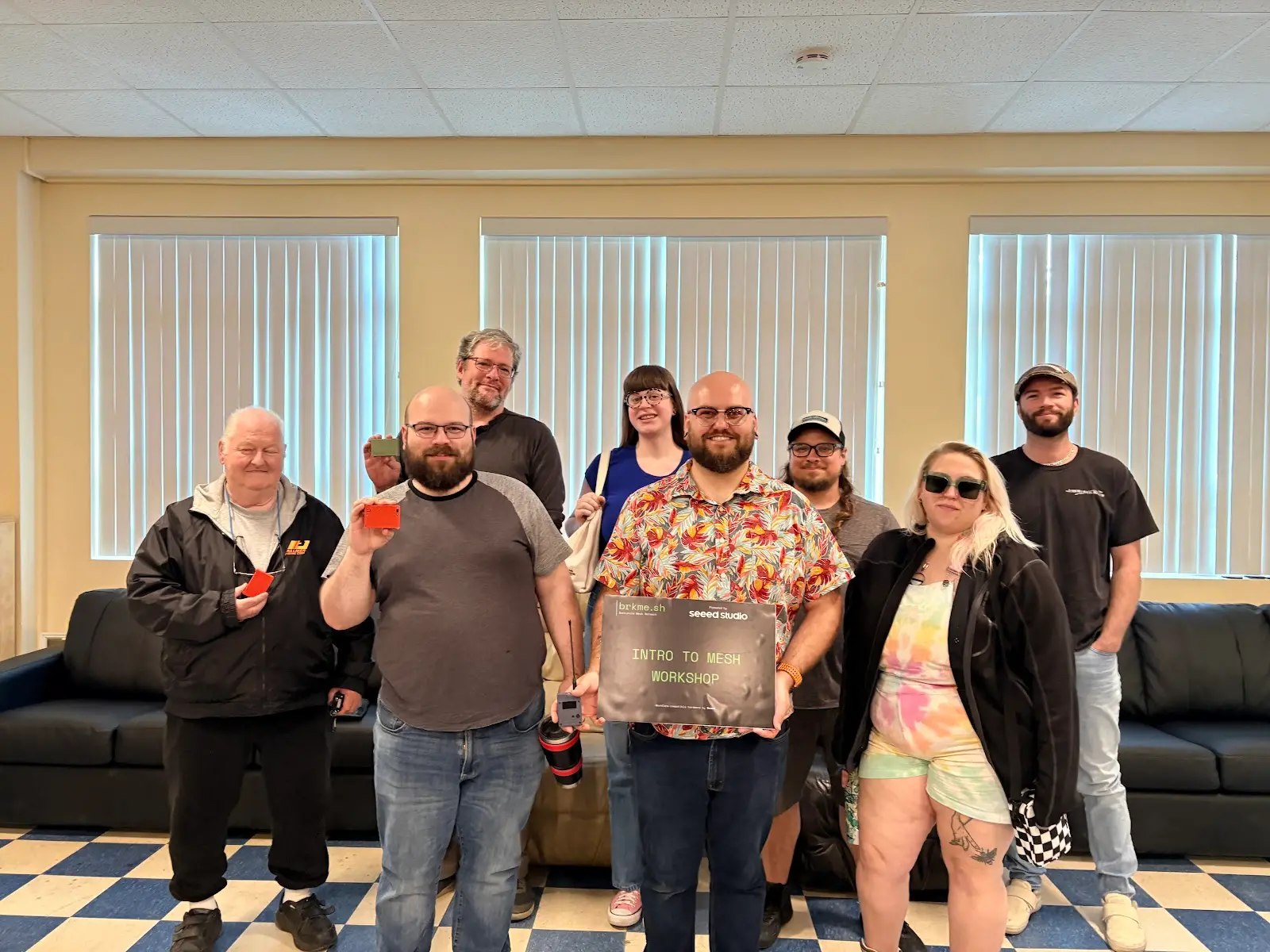
This past Saturday saw the first Berkshire Mesh introductory workshop hosted in Pittsfield. We welcomed seven individuals with varying knowledge levels in MeshCore and Meshtastic, from no experience at all, to having heard of one or the other.
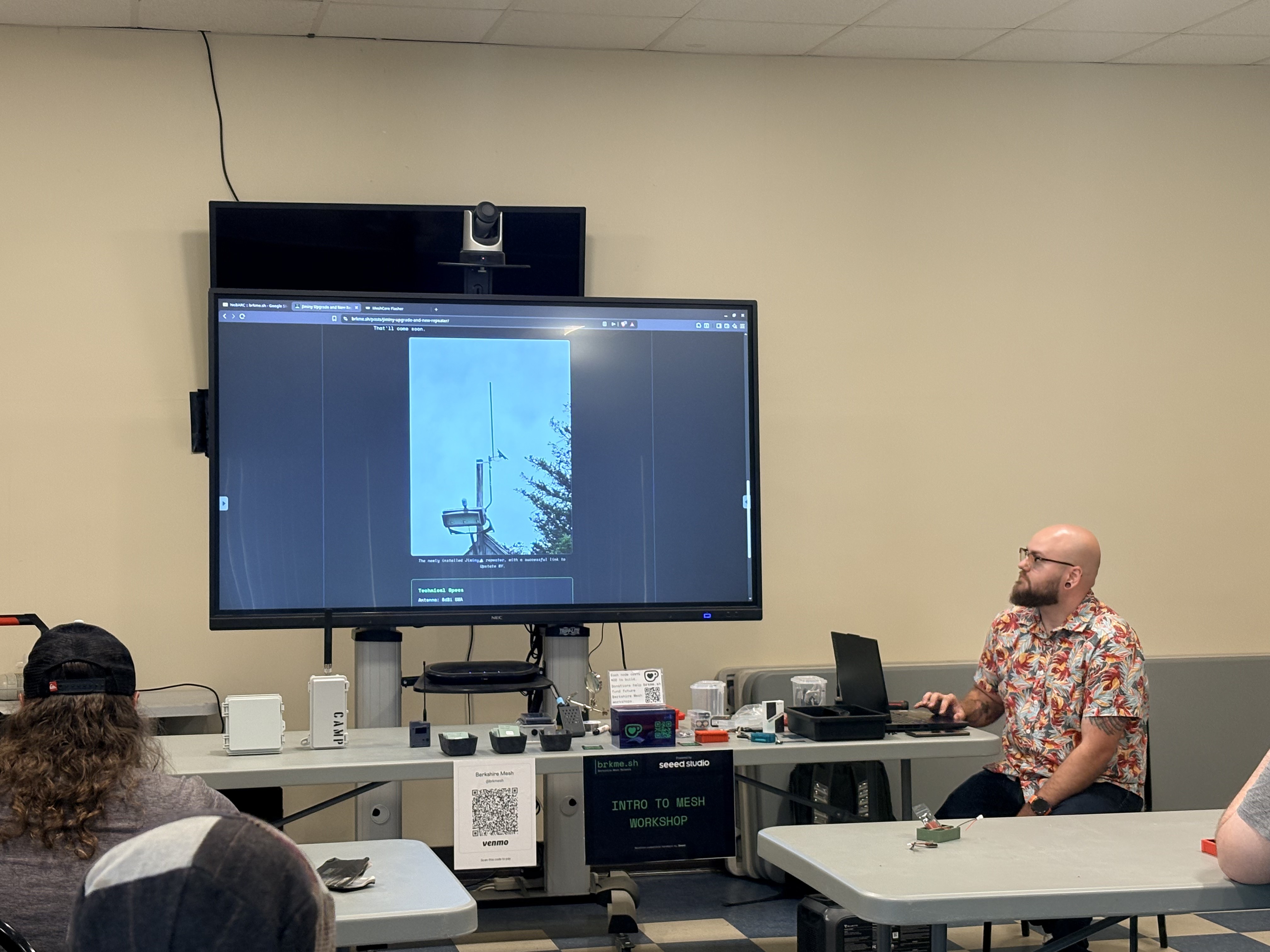
Introduction Presentation
The workshop began with a presentation giving a broad explanation of what Meshtastic and MeshCore are capable of, and what they are intended to offer. The slides showed the coverage in the Upstate NY, Central MA, Connecticut, and Greater Boston areas. Many of the attendees were from outside of Berkshire County, and getting our area connected to those regions will improve the communication abilities between all of these locations.
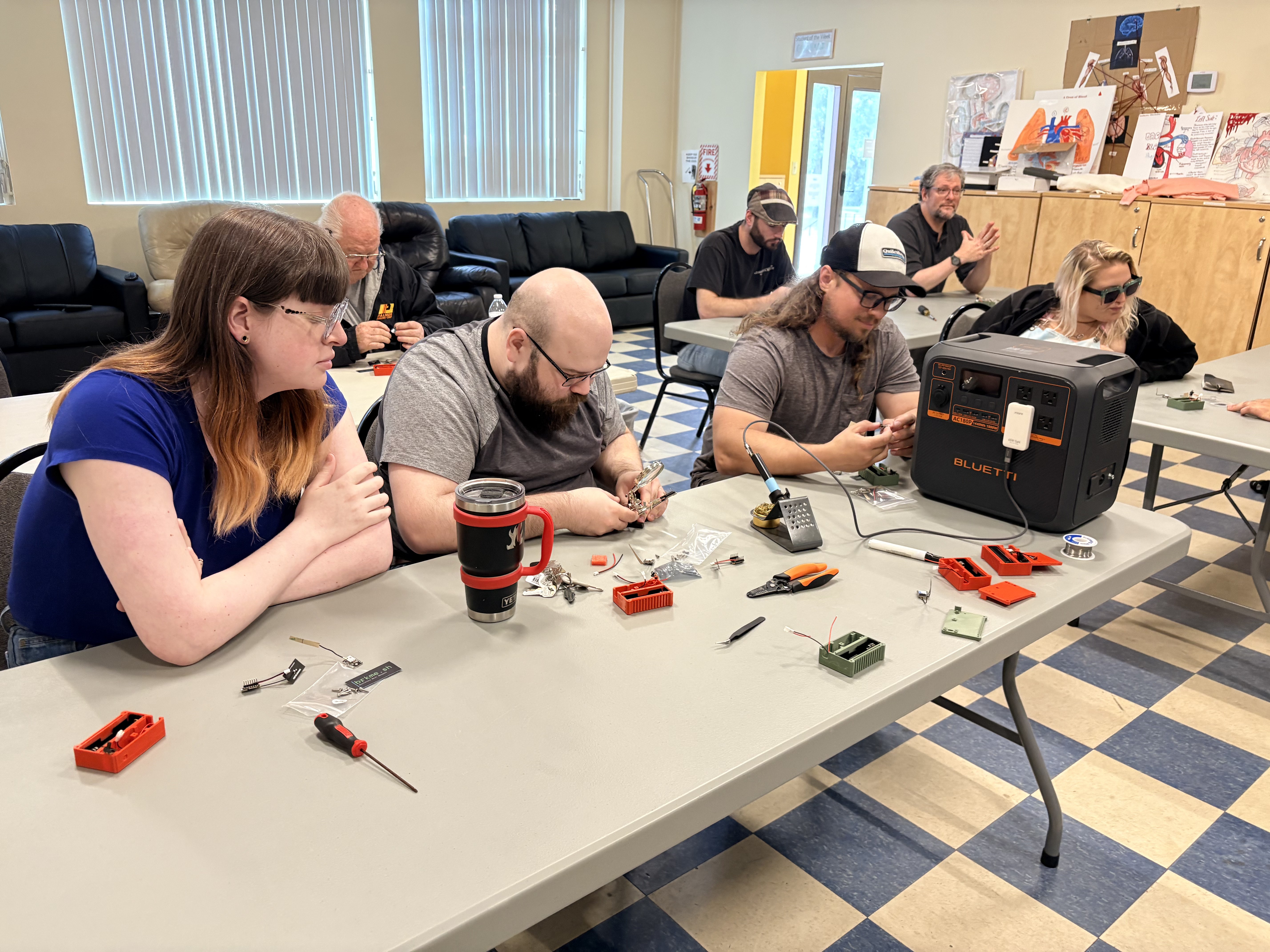
Following the presentation, we moved on to begin assembling the companion nodes that were partially prepared, with SeeedStudio XIAO ESP32's, 18650 batteries, and a 3D printed case.
Building Companion Nodes
Prior to the workshop, I prepared the SeeedStudio XIAO ESP32 boards by soldering a short JST PH2.0 lead onto the battery contacts so they could easily be connected and disconnected from the battery. I then also soldered leads onto the switch and to the opposite JST connector. This puts a power switch inline between the battery and the board. This was important for me when building the battery powered nodes as I wanted to be sure they could be fully powered off and on as needed. The downside to this design, however, is that it then requires the device to be turned "on" when charging. To avoid this I would need to put a charging board inline instead, like a TP4056. This will be an improvement I'm going to aim for in future revisions.
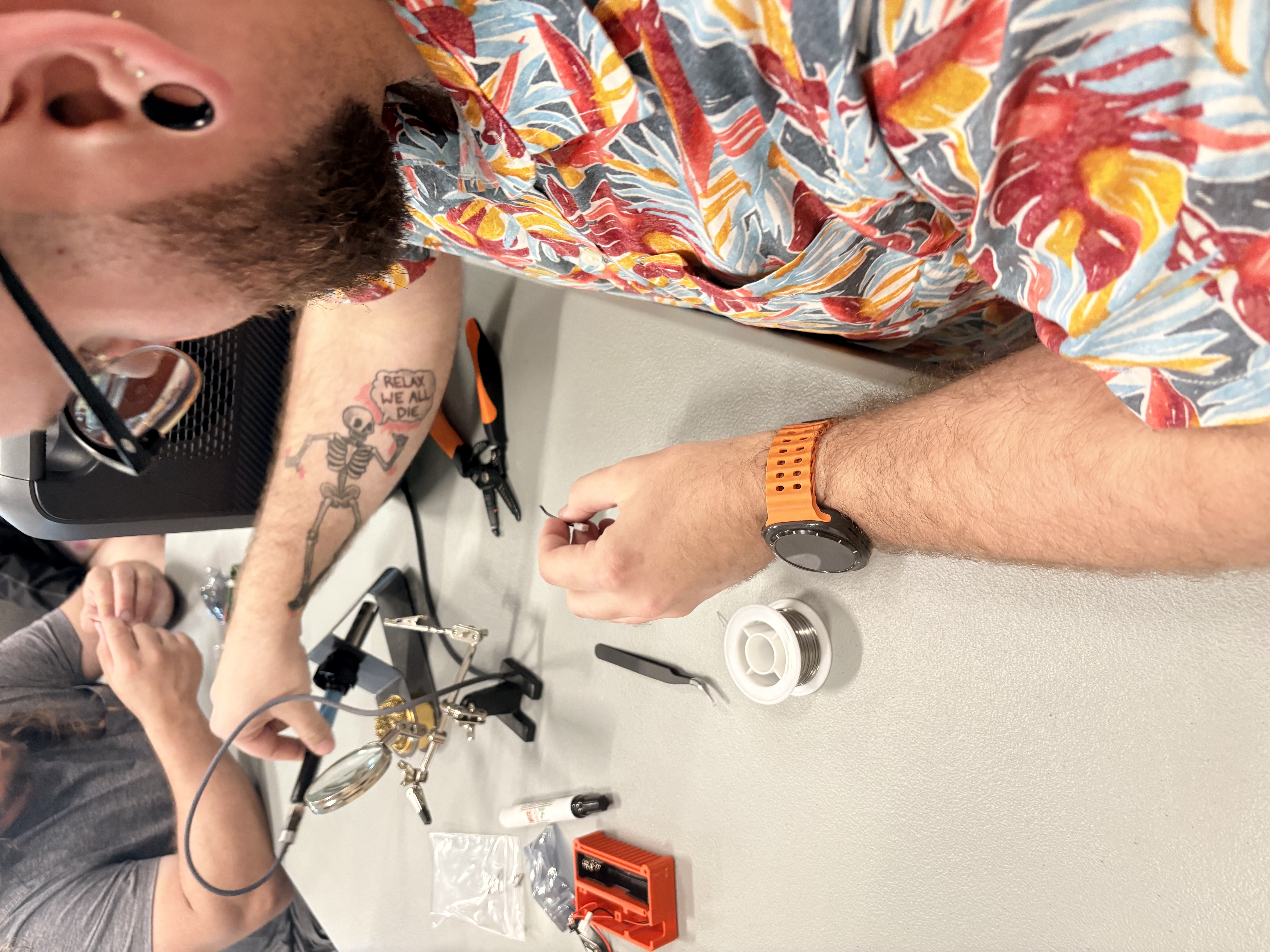
Two of the attendees were interested in trying to solder their boards with the tools and supplies I brought with me, so we took some time to work on that together as well. This likely won't be a part of future workshops. While it was very helpful and I would like to use it as an educational moment, it is very difficult to show the process to everyone in the room.
The assembly for these companion nodes were fairly straightforward, though they were somewhat cramped and took some fidgeting to get everything installed properly. This is another piece I hope to improve with future revisions. The antennas were challenging to adhere in a logical place while also not pinching them with the cover. Two of the devices were having trouble connecting after assembly, and we discovered that while putting the nodes into the cases, the BLE antenna had become partly disconnected.
Configuring the Nodes
Once we had verified that the nodes were working and assembled properly, we moved onto pairing the devices to everyone's phones. I had pre-flashed every device with v1.16 MeshCore firmware and confirmed that they all worked. I then renamed and numbered them, giving them unique PINs. I wanted to avoid each device showing up as their hex key on everyone's phones, and with the default 123456 PIN. It would have been a challenge to identify which was which.
Every attendee downloaded the MeshCore app and found their device in the connection menu. Thankfully in the most recent version of the app, it has a very helpful onboarding process for new devices. It walked them through renaming their devices and setting the region. From there, we added the #brkmesh "hashtag" channel, which is a public channel for our region. I had each attendee send a message, and when we heard my Wio Tracker L1 beep, we knew the message went through!
Questions and Suggestions
At this point, I made notes about the features in the MeshCore app, such as Line-Of-Sight, DMs, Private Channels, and adverts.
Safety suggestions were given, such as making sure the antenna is connected before powering on the device, and handling of lithium batteries.
Some of the attendees were concerned about the battery showing as 0% on their app, which is a matter of the ESP32 boards simply not reporting the battery voltage, and is unfortunately just how they work at the moment. I plan to use the nRF52840 variation for future assemblies to avoid this, and to improve battery life.
The cases currently have a small perforated hole in them that can be punched out to accomodate an SMA antenna connector. I had some feedlines available as an "upgrade" if the attendees were interested in improving their devices when they got back home with them.
Looking forward, and future workshops
As this was the first Berkshire Mesh workshop, I knew there would be significant room for improvement. I asked for feedback from the attendees, and did receive some very helpful notes. The presentation could use some up-close photos of how the devices need to be assembled. I could also benefit from slowing down my presentation and speech. I would like to additionally find ways to guide people more simultaneously rather than jumping from one person to the next.
I plan to host more events very soon. I'm aiming for mid-to-late July, or early August. Ideally it will be either in Pittsfield or North Adams, to accomodate some attendees from the Southern Vermont region. Please sign up for the newsletter and keep an eye out for announcements to sign up for the next event!